


What is unfair?
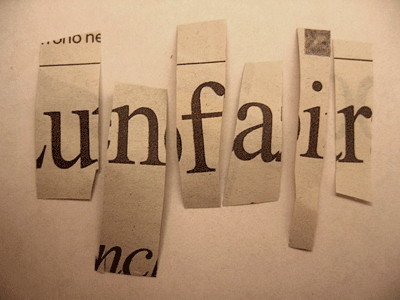
Of all the confusing legal terms used in labour law, the one that keeps most HR, IR and legal practitioners awake at night is the term ‘unfair’. This is not defined in any of the statutes, which leaves the decision of what is ‘unfair’ to whoever is applying their mind to each individual case.
It would, ironically, be unfair to blame the legislators for not providing a definition of the term because the concept has so many meanings and subjective interpretations. However, every employer needs to have a grasp of what ‘unfair’ means in a legal sense to avoid the legal repercussions of doing anything unfair to their employees.
In trying to find the meaning of this elusive term, we need to look at dictionary explanations and definitions, at statutory expressions referring to the term, and at the way in which the courts interpret it.
How do dictionaries define ‘unfair’?
The Soule Dictionary of English Synonyms provides the following synonyms for ‘unfair’:
- Unjust,
- Inequitable,
- Partial,
- Dishonest,
- Dishonourable,
- Disingenuous,
- One-sided,
- Unequal,
- Insincere,
- Uncandid,
- False,
- Hypocritical,
- Faithless,
- Oblique, and
- Truthless.
Certain of these terms - such as dishonest and faithless - can relate to unfairness in specific contexts. However, they do not assist us in our search for the meaning of ‘unfair’ in the area of labour law.
In my view, terms such as ‘one-sided’ and ‘unequal’ contain strong elements of what ‘unfair’ means in labour law. In other words, the concept of imbalance plays a significant part in my own interpretation of the term ‘unfair’.
The Collins Concise Dictionary defines ‘unfair’ as “characterised by inequality or injustice. Dishonest or unethical”.
Again, the concept of inequality plays a role in defining what is unfair.
However, inequality or one-sidedness does not fully explain the concept of unfairness in labour law because there are many examples of one-sidedness that are not seen as unfair in labour law. For example, giving company cars to mangers and not to lower-level staff is one-sided but is not unfair per se. Conversely, it is hard to find an example of unfairness that does not have an element of one-sidedness.
How does the law define ‘unfair’?
Section 23(1) of the Constitution of South Africa states that “everyone has the right to fair labour practices”. The word ‘right’ in this legal provision is useful because infringing the rights of an employee is likely to be seen as unfair in labour law.
The Labour Relations Act (LRA) provides that “every employee has the right not to be:
- Unfairly dismissed; and
- Subjected to unfair labour practice.
Section 187 of the LRA provides that a dismissal is automatically unfair if it has an unfair reason. The section then lists the reasons for dismissal that would be unfair, e.g.:
- If the employee was fired because he had exercised his right to take action against his employer in terms of the LRA. This retaliatory dismissal would be automatically unfair. Again, the employer interfering with an employee’s right is defined as unfair.
Section 188 of the LRA states a dismissal is unfair, even if it is not automatically unfair, if the employer fails to prove that the:
- Reason for the dismissal is fair; and
- Dismissal was effected in accordance with a fair procedure.
This section does not explain what is meant by ‘a fair reason’ or a ‘fair procedure’. However, common law has established guidelines to point us in the right direction. These guidelines have been codified in Schedule 8 of the LRA, for example:
- Item 7(b) includes a requirement that when any person decides if an action of misconduct was fair must, among others, determine if the dismissal was an appropriate punishment for rule that the employee contravened.
The word ‘appropriate’ here gives us a clue about what is ‘unfair’:
- If the employer’s decision or action is inappropriate, it could be unfair in labour law.
The word ‘appropriate’ in a labour law context implies that the employer’s action (i.e. the employee’s punishment) must fit the employee’s crime, e.g. it is inappropriate to fire an employee for a minor infringement.
The challenge is then to decide what penalty is appropriate in each circumstance. This is not a simple matter but the general rule of thumb is that it is appropriate to dismiss an employee for an offence that had a more serious consequence is not unfair unless extenuating circumstances exist.
 |
Ivan Israelstam is the Chief Executive Officer of Labour Law Management Consulting. He is known as a leading practitioner in labour law and pragmatic labour relations management with many years experience in corporate human resources management. He has an honours degree from The University of the Witwatersrand and an IPM diploma in Personnel Management and in Training. Contact Ivan: This e-mail address is being protected from spambots. You need JavaScript enabled to view it. . |


