


Beware of these 3 after the holiday season
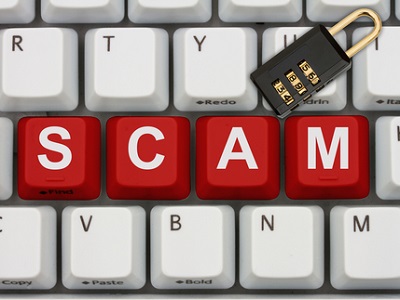
Around this time, your employees are probably looking at their phones with expectant eyes, waiting patiently for that ‘magical’ sms saying their salary has landed in their account – all because they were a bit too free with their money over December… This is the perfect time for scammers to come out in full force as there are only too many cash-strapped people out there. I’ve listed three of the biggest scams currently so that you and your employees can stay one step ahead of the prowling fraudsters!
1. Malicious links in text, e-mail or Facebook feeds
The easiest way to be targeted is via an e-mail, text or Facebook post that offers a great deal. Don’t click on a link in an e-mail from someone you don’t know as it could be spyware or a malicious program designed to capture passwords and other personal information:
- If you don’t remember entering a competition or ordering a package, it’s probably a scam.
- If the deal is too amazing to be true, it’s probably a scam. For example, the “Get a Free R500 Woolworths or Pick ‘n Pay Gift Card by sharing the link on your Facebook page” scam.
Always check the source of the link even if it’s from someone you know because a scammer could’ve hijacked their account and sent it on their behalf.
2. Phony gift card offers
This is in the form of an e-mail, text message or Facebook post saying that you’ve won a prize or that you’ve qualified for a massive discount or sum of money on a gift card. You would then be required to enter extensive personal information, or share the link with your friends, to receive it. Don’t do it! The more personal information they have, the easier it’ll be to get into your bank account, for example.
Ignore links offering ridiculous discounts and steer clear of sites that offer gift cards at unheard-of prices.
3. Unknown sites advertising unbelievable offers
You know the saying: “if it sounds too good to be true, it probably is”? This is the general rule when it comes to scams. Some sites do offer amazing deals, like Groupon and Superbalist (Citymob), but it’s the unknown sites you need to watch out for:
- The ones with strangely spelt names, or
- The ones offering highly sort after items, like iPads and iPhones, at abnormally low prices.
Be very careful when you enter your credit card details on unknown sites and make sure that the site is secure:
- The web address should begin with ‘https://’ instead of ‘http://’. The “s” means that it’s secure. I recommend using a separate card for online purchases and set your limits as low as possible so that if your details are stolen, the damage will be minimal.
- It’s also advisable not to save any of your credit card details on a site for future purchases.
Dubious websites can also pull you in by offering vouchers for popular gifts. If you have to enter a lot of personal information to get the voucher, the warning bells in your head should start to ring.
If you’re required to sign up for the account to make a purchase, it’s a good idea to use a password you haven’t used for anything else.
2 Steps to follow if you think you’ve been involved in an online scam
• Step#1: Immediately run a virus scan. Mobile phones and tablets aren’t immune to scamware so this applies to all devices. I recommend using ESET NOD32 for desktop and mobile security.
• Step#2: Change your password if you think you have been scammed on a social media site. Call your credit card company right away – they’ll put a watch on your card for suspicious activity.


