


The world needs diversity
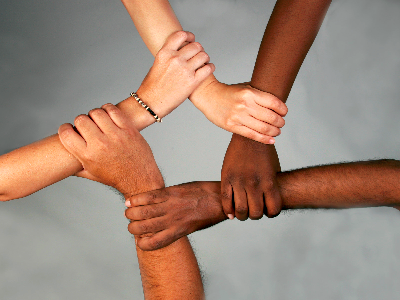
If we want to solve the new generation of global economic, social and environmental crises, traditional patriarchal structures must give way to more diverse approaches that blend masculine and feminine values.
What our recession-weary, environmentally challenged and stressful world really needs is more women at the top, not only in businesses but leading countries as well.
According to the World Economic Forum’s Global Gender Gap Report, 2011, “Countries and companies will thrive if women are educated and engaged as fundamental pillars of the economy. Diverse leadership is most likely to find innovative solutions to tackle the current economic challenges and to build equitable and sustainable growth.”
Women are still largely absent from positions of power in business
This is the case in South Africa as well as in the rest of the world.
The 2012 South African Women in Leadership Census, Business Women’s Association found there is a lack of women in leadership positions as 79% of executive managers as well as 83% of directors of JSE companies and state-owned enterprises (SOEs) are men.
The latest Harvard Business Review’s (January/February 2013) list of top-performing CEOs globally has only two women in the top 100. But predictions for the future are encouraging. US-based Frontier Communications Corp anticipates that female CEOs at Fortune 1 000 companies will double by 2017 and the UK will have more female than male millionaires by 2020, according to the Centre for Economics and Business Research.
Both men and women in business still worship the hero leader
The same Harvard Business Review list celebrates increased market capitalisation and shareholder returns as the successes of a single person at the top of the pyramid, e.g.:
- Steve Jobs;
- Jeff Bezos;
- Yun Jong-Yong; and
- Roger Agnelli.
Modern techno-economic infrastructure requires masculine and feminine values
It’s not just a nice-to-have or submission to pressures from women. Patriarchy cannot take us where we need to go next to solve the economic, social and environmental crises that we face.
The task ahead is two-fold:
- Firstly, to bring more women into leadership positions; and
- Secondly, to change organisational forms to reflect the integration of the masculine and the feminine.
Men and women need to develop stronger leadership brands
A vital part of loosening the stranglehold of patriarchy is for both men and women to build wiser and healthier personal leadership styles. Wiser and healthier by definition develops and integrates mature masculine and mature feminine values, and embraces diversity.
How to get there looks the same in 2013 as it did in 1990. American scientist Peter Senge has written that one of the key disciplines required for wise leadership is personal mastery. People with a high level of personal mastery are acutely aware of their ignorance, their incompetence, their growth areas but paradoxically they are deeply self-confident.
Added to this, they are able to experience the full range of their emotions, are passionate, believe in their ability to influence events in their lives and therefore take responsibility. They are not always blaming others when things go wrong. Their lives are in balance, they are creative and inventive and they are talented at self-observation and self-reflection.
Personal mastery is a challenge
But our problem is not that there is a shortage of excellent leadership models, frameworks, theories, and the like to develop personal mastery. The problem is that it is just so much hard work.
So most of us give up. We are comforted that we fit in with those around us. We become weary of challenging the status quo and the effort of working on ourselves. We focus on winning, beating the competition, being number one or two in the game, creating competitive advantages because it’s a lot simpler than doing all of this and still considering the bigger issues of global sustainability and impact of our business and our leadership in a wider context.


